Post-quantum cryptography migration
End-to-end PQC migration, from first scan to final cutover.
We assess your cryptography, build the roadmap, run the program and guide every engineering team, then secure your AI with the same discipline.
The problem
Swapping the algorithm is the easy part.
Data encrypted today can be harvested now and decrypted once quantum computers arrive. The fix is known. What stalls programs is everything around it.
Discovery access
Scanners that disagree, and systems they can’t reach
HSM lead times
Hardware that must be ordered, certified and installed
Vendor roadmaps
Third parties that move on their own clock
Change freezes
Windows that close just when a wave is ready
Our approach
Migrations don’t stall at the scan. They stall at the change.
We move every key and certificate safely, from legacy through a managed transition to post-quantum, starting with internal PKI and cloud key management.
1
Reconcile
Merge the findings of the discovery tools you already own into one inventory.
2
Rank
Weight every key and certificate by the business process it serves.
3
Migrate
Move each asset through a managed transition, with rollback at every step.
4
Prove
Seal tamper-evident evidence at every step, ready for auditors.
PQC services
Six services, one migration program.
Use them together as an end-to-end program, or start with the one you need now.
01
PQC readiness assessment
Know what you have and what it protects.
Cryptographic inventory and bill of materials (CBOM)
Every key and certificate ranked by the business process it serves
Harvest-now, decrypt-later exposure
02
PQC strategy and roadmap
A plan executives can decide on.
11-phase framework, private- and public-sector editions
Wave-based, multi-year roadmap
Aligned to FIPS 203, 204 and 205 and CNSA 2.0
03
PQC program management
Governed from charter to cutover.
Charter, governance and decision rights
Phase and stage gates, each with evidence
Stakeholders, risk and benefits tracking
04
Engineering playbooks
A playbook for every engineering team.
PKI, HSMs and key management
Mainframe, OT, cloud and AI/ML
Managed transition with rollback
05
Vendor PQC compliance
No vendor becomes the weakest link.
Vendors tiered by exposure
Dated mandates and contract clauses
Enablement path and enforcement ladder
06
Tool evaluation and selection
Buy only what fills a real gap.
Scoring criteria and coverage mapping
Proof-of-concept playbook
Review of the tools you already own
AI security
Security for the whole AI lifecycle, from training data to the answer.
Every model and agent is an identity with no standing access. The system tests itself, learns from what got through, and tightens policy, with a human on every loosening.
LLMOps and MLOps: signed datasets and models, tag-scoped retrieval
AI agent security: one identity per agent, a signed manifest, a token at every step
Model security: prompt pre-flight, grounded answers, weights verified before load
Continuous red teaming across 19 attack categories
Sovereign Quantum System on Chip (Q-SoC)
One sovereign system for applications, AI and quantum.
The platform we are building to host AI models, LLMs and SLMs on infrastructure the organization owns, under one operating system and one security model.
CPUs for applications and GPUs for AI models
A trapped-ion quantum processor
A bio-ferritin memory tier, in active research with university and laboratory partners
Research
Published work behind the methods.
Our research covers zero trust with post-quantum cryptography, quantum systems security and the Q-SoC architecture.
BDZT paper accepted at QASC’26 (Springer Nature, LNEE)
Zero trust with post-quantum cryptography for heterogeneous quantum processors
About Intercession
Architects of post-quantum and zero trust security.
Intercession is based in McLean, Virginia. Founder and Architecture Lead Christopher Turk previously served as the PQC Technical Implementation Lead at KPMG and has built security architecture across consulting, healthcare, finance and government programs.
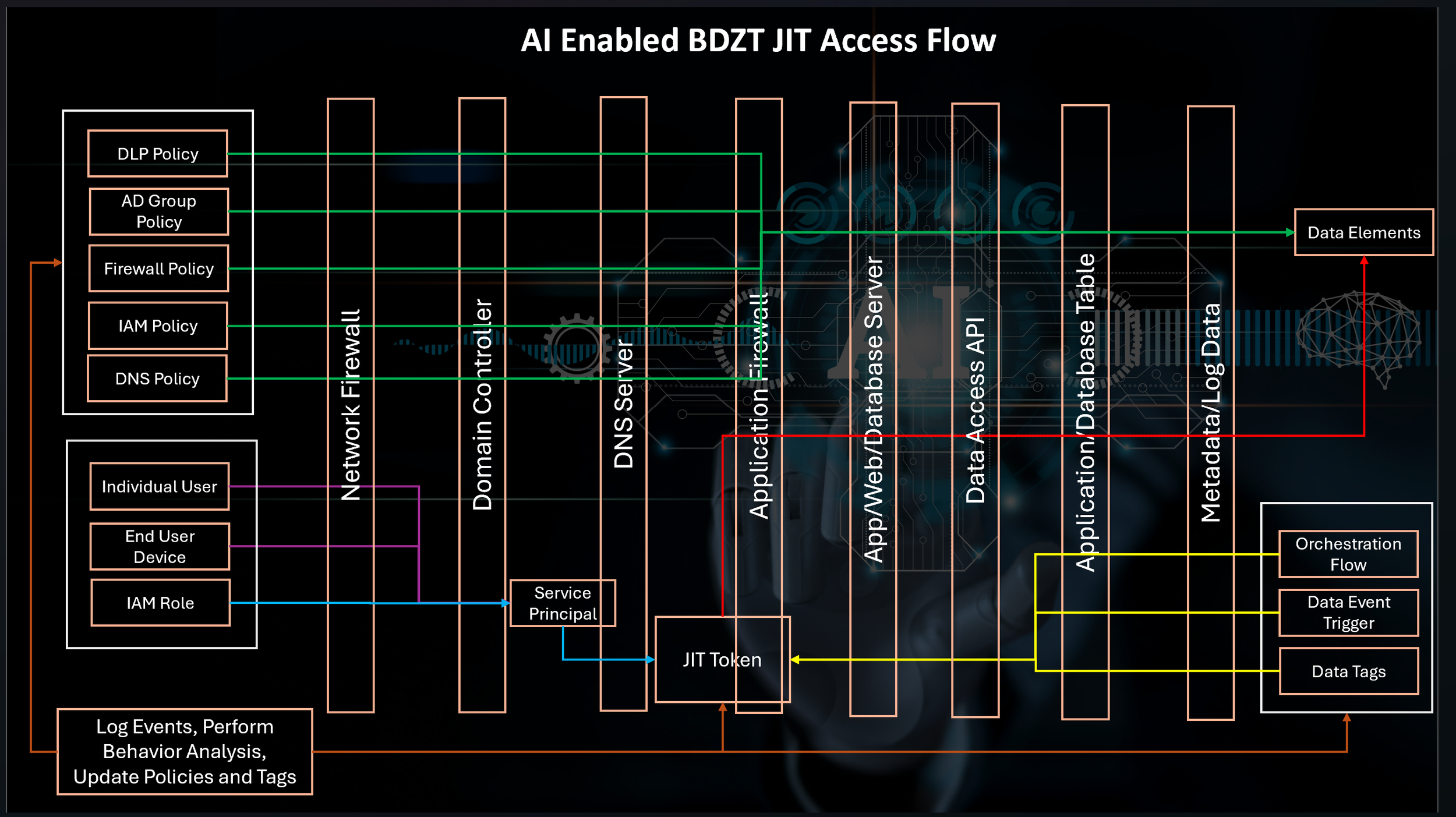
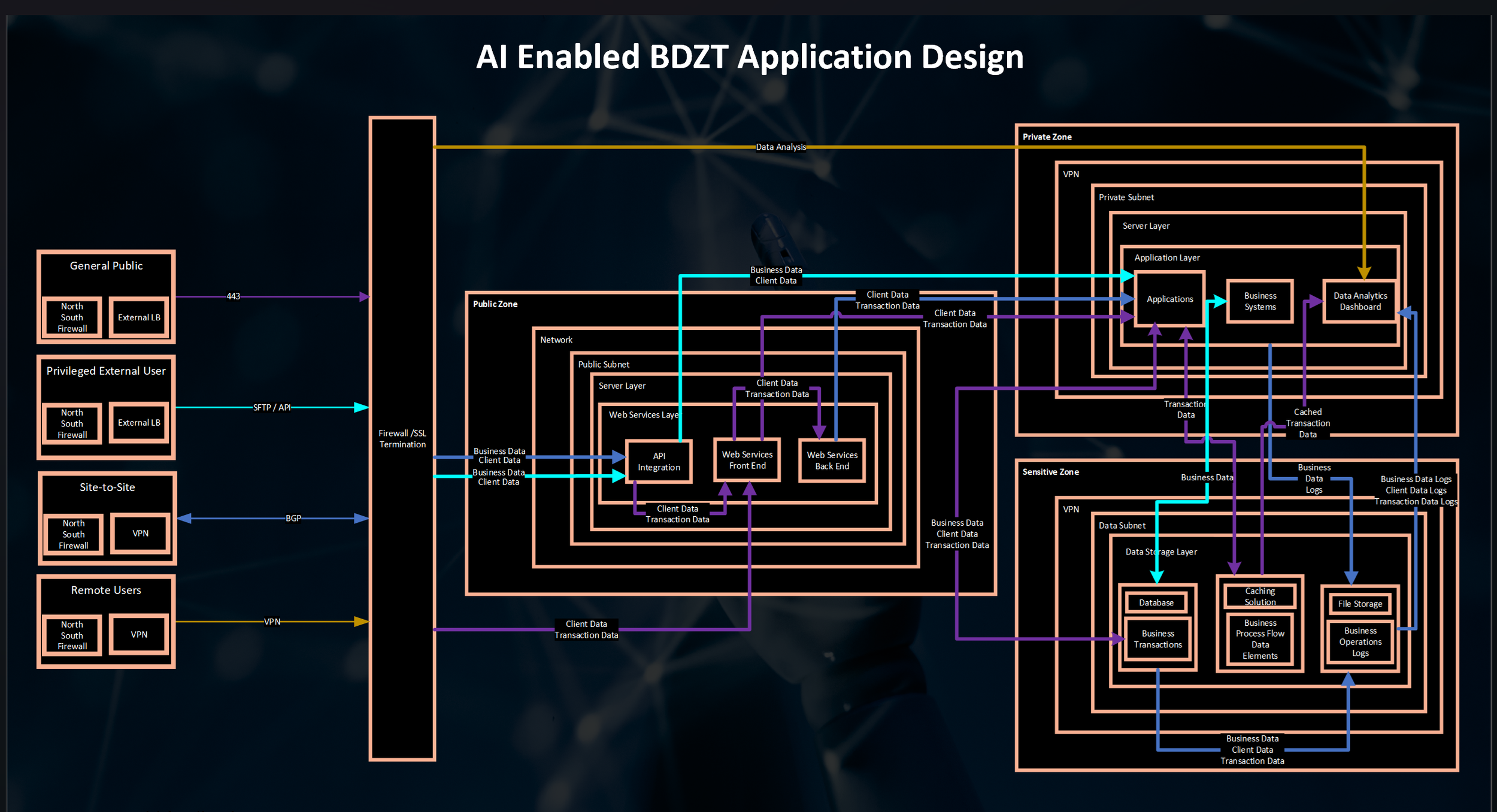
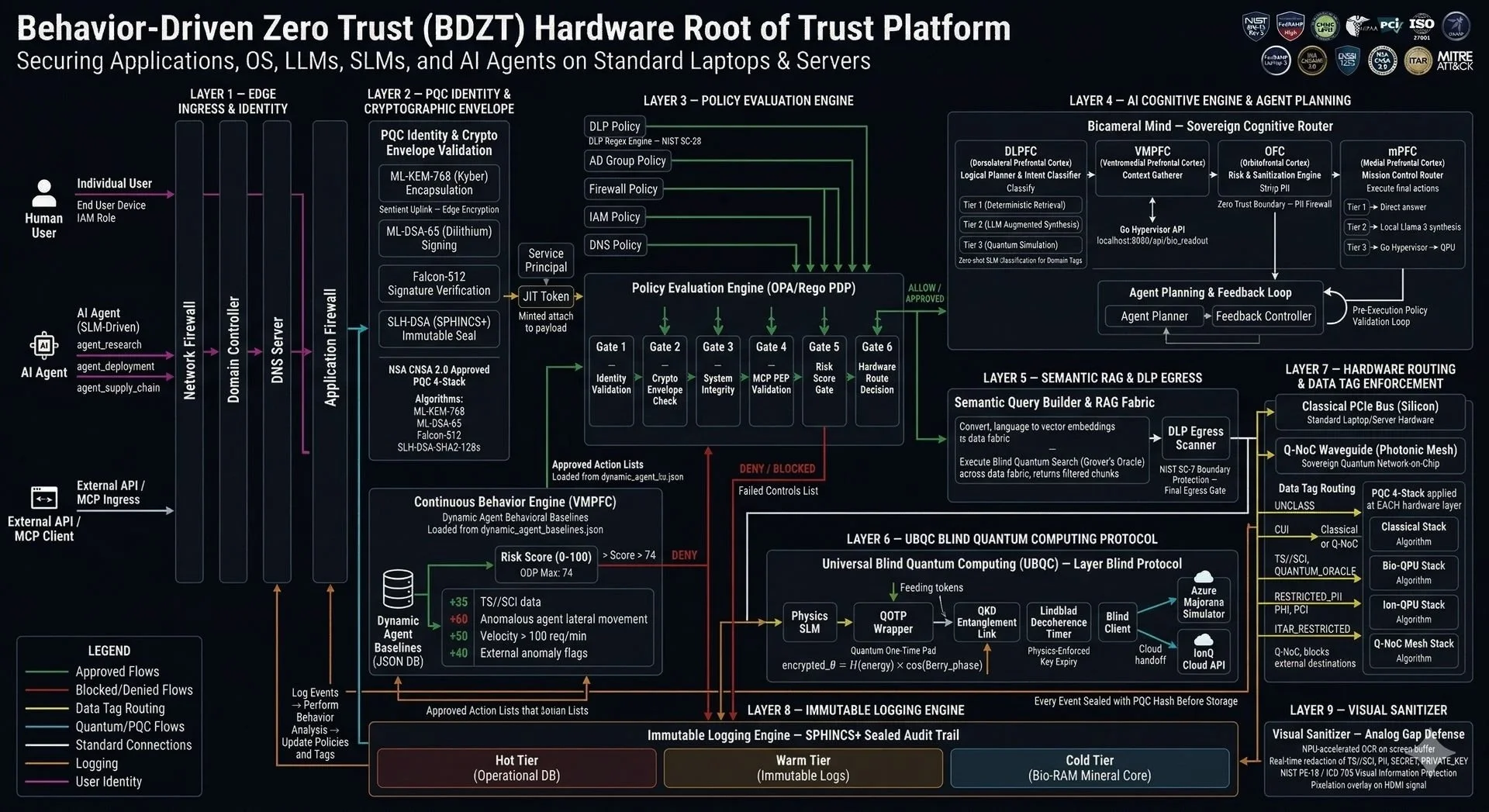
Behavior-Driven Zero Trust (BDZT)
The framework underneath it all.
Every user, workload and AI agent gets its own identity and earns access one short-lived token at a time. The system learns from every event to tighten policy.
1 · Classify the data
4 · Just-in-time access
2 · Roles, policies, tags
5 · Log by tag
3 · Canonical model
6 · Score and update
Contact
Planning your PQC migration?
Start with a readiness conversation. We’ll show you what to move first and what stands in the way.